A practical guide to bedding materials
How to Evaluate Luxury Sheets: Weave, Fiber, and Fit
The difference between a sheet that feels exceptional and one that merely looks expensive is rarely captured by a single number. Fiber, weave, finish, fit, and care all matter—and the right combination depends on the person who sleeps in the bed.
Choosing luxury sheets is less about chasing a label than understanding what your hands, habits, and mattress actually need.
A bed is a familiar object, but the textiles on it are anything but simple. A sheet can feel cool and crisp, smooth and softly lustrous, or light enough to almost disappear. Those impressions come from several choices made before the linen reaches a bedroom: the kind of fiber, the way yarns are woven, the finishing applied to the fabric, and the measurements used to cut and sew it.
Luxury sheets invite a particular kind of scrutiny. The price may be higher, the packaging more considered, and the product story more evocative. Yet none of those details guarantees that a sheet will suit your body or your routine. A beautifully made fabric can still feel too warm to someone who sleeps hot. A soft fitted sheet can still creep off a deep mattress if its pocket is too shallow.
The best approach is to evaluate the textile, not just the promise. Think about fiber first, then weave and finishing. Check the fitted-sheet dimensions with a tape measure. Finally, consider laundering: a sheet that needs more attention than you can give it may not be a practical luxury.
Start with the fiber, not the thread count
Cotton is a common foundation for premium bed linen because it is breathable, washable, and adaptable to different weaves. But “cotton” describes a broad family of fabrics, not one uniform quality. The length and consistency of the fibers, the quality of the yarn, and the construction of the cloth all influence how a sheet feels and wears.
Long-staple cotton is made from fibers longer than those found in many standard cottons. Longer fibers can be spun into smoother, stronger yarns with fewer exposed ends. That can contribute to a fabric that feels refined and resists fuzzing, though it is not a guarantee of performance by itself. Spinning, weaving, dyeing, finishing, and care matter too.
Extra-long-staple cotton is often associated with especially fine yarns. Supima is a trademark for American-grown extra-long-staple cotton, and its name refers to a specific fiber origin and standard rather than a particular weave. A sheet made from it might be woven as percale or sateen; those constructions create quite different experiences. The fiber tells part of the story, while the weave tells another.
Linen, made from flax, offers a different character. Its texture is more irregular than cotton’s, and it tends to soften with use and washing. Many people value its relaxed appearance and airy feel, while others prefer the smoother, more uniform surface of cotton. Linen can wrinkle readily; that is a feature of the fiber, not necessarily a defect. The question is whether that lived-in finish suits your idea of a made bed.
When comparing luxury sheets, look for a clear fiber description. “Cotton” alone is less informative than a stated fiber type and origin, if provided. Be cautious of grand claims that do not explain what the material is or how the fabric is constructed. A useful product description should help you understand what you are buying, not simply make the purchase sound prestigious.
Percale and sateen: two different kinds of comfort
Weave is the arrangement of yarns that creates fabric. In everyday bedding, percale and sateen are two familiar cotton constructions. Neither is inherently superior. The choice is a matter of hand, appearance, temperature preference, and care.
Percale: crisp, matte, and breathable
Percale uses a balanced one-over, one-under weave. The resulting surface often feels crisp, smooth, and cool, with a matte appearance rather than a pronounced sheen. Some sleepers compare it to the fresh, pressed feel of a hotel bed. Others find it initially firm or less immediately silky than sateen.
Because percale has a clean, open character, it is frequently favored by people who sleep warm or prefer a light, cool surface. That does not mean every percale sheet will feel identical. Yarn quality, finishing, fabric weight, and laundering affect the final hand. A new sheet may soften with use, while a particular finish can make it feel smoother right away.
Sateen: smooth, drapey, and softly lustrous
Sateen uses a weave structure that places more yarn floats on the fabric’s surface. The result is often a smoother hand, a gentle sheen, and a more fluid drape. The surface can feel invitingly soft from the beginning, especially to someone who likes a polished, silky impression.
That smoothness may come with a warmer feel for some sleepers, although room temperature, bedding layers, and individual comfort all play a role. A sateen sheet is not automatically hot, just as percale is not automatically cool in every bedroom. If temperature is a priority, try to handle the fabric or choose a seller with a clear return policy.
Read the weave label carefully. A high thread count does not transform percale into sateen, or the reverse. Nor does a thread count alone describe the fabric’s weight, softness, or durability. It is one piece of information, best considered alongside fiber, construction, and feel.
Thread count: useful context, poor shortcut
Thread count measures the number of threads counted in a square inch of fabric, though counting conventions and construction can complicate direct comparisons. It is easy to turn the number into a contest: higher must mean softer, finer, more luxurious. That conclusion does not follow.
A well-made sheet at a moderate thread count can feel better and last longer than a poorly made fabric with a much larger number on its label. Fiber length and yarn quality matter; so do the weave and finishing. In some cases, very high counts are achieved by using finer yarns or counting methods that make comparisons difficult. A number without context is a weak guide.
Use thread count to compare like with like, not to rank every sheet on one ladder. A 300-thread-count sateen and a 400-thread-count percale are not simply two versions of the same cloth. They differ in both construction and likely hand. If a description presents thread count as the sole evidence of quality, keep looking for better information.
A brand can be a reference point, not a substitute for judgment
Sferra is one recognizable name readers may encounter while exploring premium sheets. It can serve as a reference point in a broader market, but a brand name alone cannot tell you whether a specific sheet matches your preferences. Collections can differ in fiber, weave, finish, detailing, and care instructions. Compare the particulars of the item rather than assuming every product under one label shares the same qualities.
This principle applies across the luxury bedding market. “Made in Italy,” for example, may be meaningful provenance, but it does not identify a single texture or standard of comfort. Italian production can include different fibers, weaving methods, dyeing processes, and finishing choices. Provenance is one detail to consider alongside construction and transparent product information.
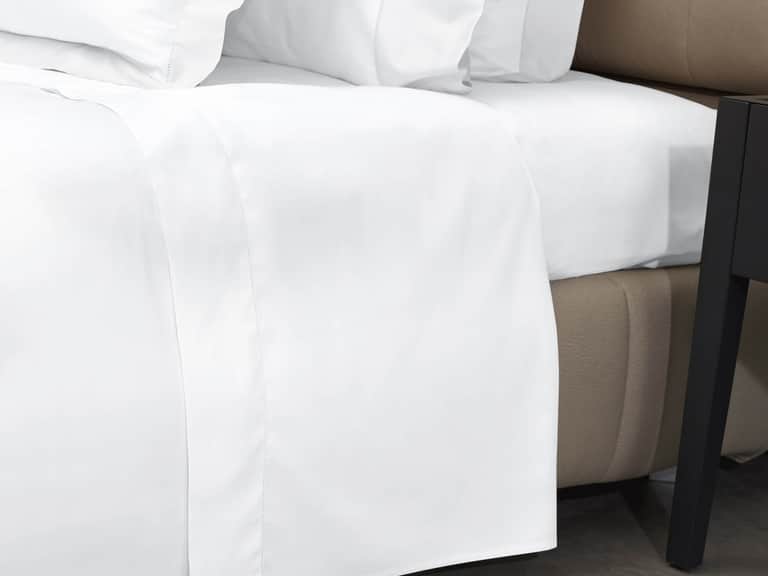
As one example of the kind of information worth examining, the Tuscan Dreams Flat Sheet is described as a 400-thread-count percale made from extra-long-staple Supima cotton and finished with a hemstitch. Those specifics help a reader form a picture: cotton percale, rather than sateen; a crisp construction rather than a deliberately glossy one; and a decorative edge that is separate from the fabric’s underlying performance. The stated care routine is also part of the decision, not fine print to ignore.
When you compare Sferra sheets or any other premium option, build a short checklist: What is the fiber? What is the weave? What is the sheet’s weight or feel, if stated? Where was it made? What does the care label require? Is the fitted sheet available in the needed size and pocket depth? Clear answers are more useful than adjectives such as “cloud-like” or “unparalleled.”
Fit is where the shopping stops being abstract
A sheet can have excellent fiber and weave and still fail at the first tug of the blanket. Fit is especially important for fitted sheets, whose elastic edges must hold around the mattress without stretching to their limit or leaving surplus fabric that bunches underneath.
Measure the mattress rather than relying only on a size name. Record its length, width, and depth. Include a topper or mattress pad if you normally leave it in place; the combined height is the measurement the sheet must cover. Mattress labels such as “queen” or “king” usually indicate surface dimensions, but they do not establish the depth of the mattress or the total height of the sleep setup.
Then check the sheet’s pocket depth and the maker’s guidance about compatible mattress sizes. If the product description does not give a clear maximum depth, ask before ordering. Elastic all around can help a fitted sheet stay in place, but it cannot make an undersized pocket fit a much deeper mattress.
Flat sheets have their own fit considerations. A generous sheet offers more room to tuck and can be useful on a taller mattress. If you use a flat sheet as the primary layer, consider how much drape you prefer on the sides and foot of the bed. The right dimensions depend on how you make the bed as much as on the mattress itself.
Pay attention to construction details such as corner depth, elastic placement, and whether the fitted sheet is designed for a mattress alone or a mattress-plus-topper combination. These are practical specifications, but they influence the nightly experience more directly than an elegant border or a dramatic product photograph.
Finishing and details: small choices, lasting impressions
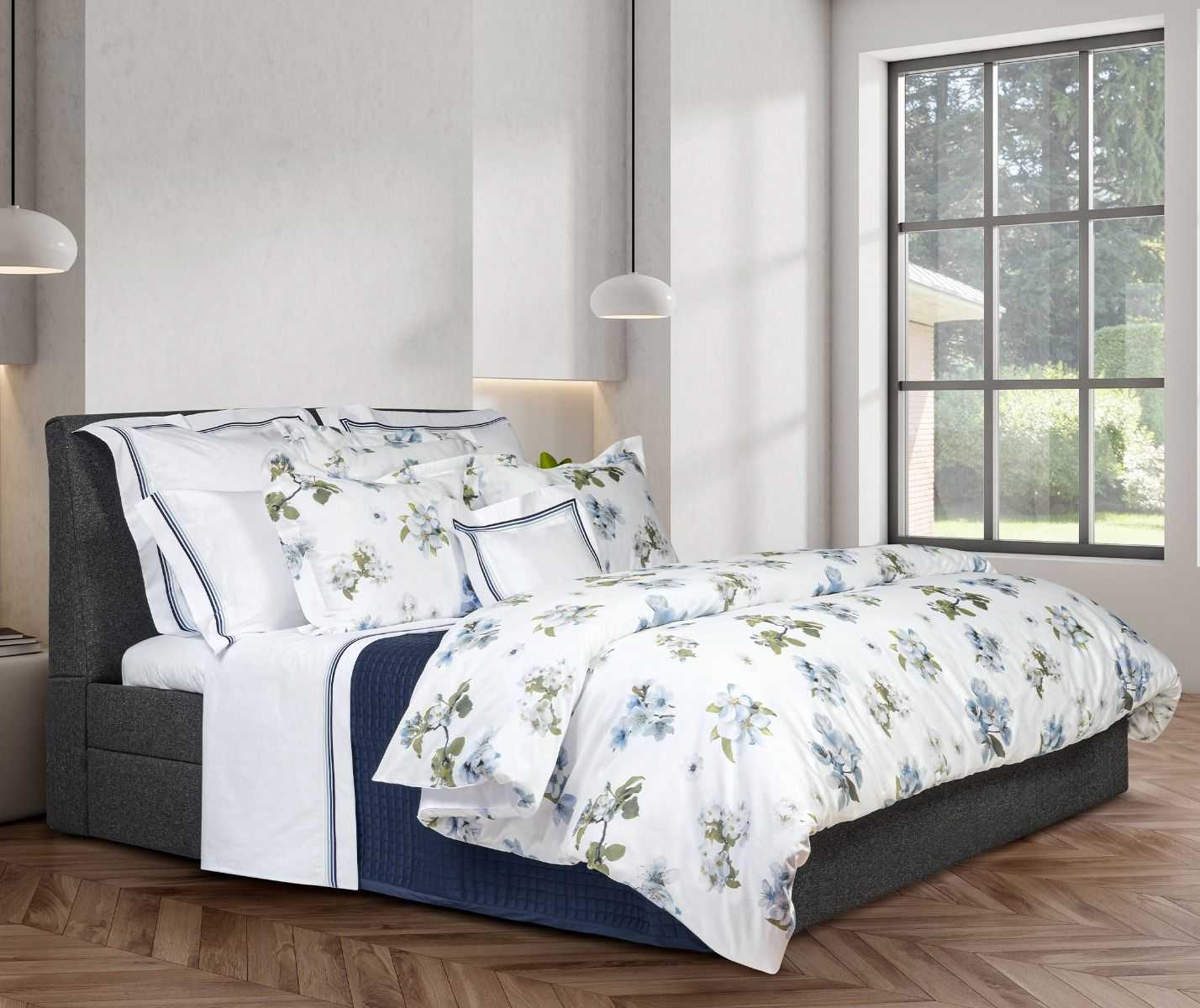
Once fiber, weave, and fit are understood, look at the finishing. Hemstitching, embroidery, lace, printed patterns, and jacquard texture can give a sheet set its visual identity. They are not automatically signs of superior fabric, but they may be part of the pleasure of living with it.
Consider where decorative details sit. A cuff at the top of a flat sheet can frame a turned-down bed. Embroidery may add texture without changing the feel across the main sleeping surface. A printed design can bring color to a room, while a solid tone makes it easier to coordinate layers over time. These choices are matters of taste, but they also affect how versatile the set will be.
Finishing can influence hand and appearance. Fabric may be treated to feel softer, look more relaxed, or hold color in a particular way. A finishing process is not necessarily a flaw or a shortcut; the important point is to understand that “cotton” does not determine every sensory quality. If possible, feel a sample or evaluate the return terms before committing to a complete set.
Care is part of the real cost
Luxury sheets are meant to be used, and repeated washing is part of their life. Care instructions can help preserve color, shape, and surface, but they also reveal whether the linen fits your household. A delicate wash cycle, mild detergent, low tumble-dry temperature, or prompt removal from the dryer may be reasonable for one person and inconvenient for another.
Follow the product’s own label rather than relying on a universal rule. Cotton percale, sateen, linen, and fabrics with decorative trims may have different instructions. Avoid assuming that hot washing, bleach, fabric softener, or high dryer heat is harmless. Some manufacturers advise against particular products because they can affect the fibers, finish, or color.
To reduce wear, wash sheets with similar colors and fabrics, avoid overcrowding the machine, and use detergent in a measured amount. Remove linens while they are slightly damp if the instructions recommend it; this can make wrinkles easier to manage. If ironing is optional, decide whether a pressed appearance is important enough to justify the extra time.
Care has a direct bearing on value. A sheet that retains its feel through regular laundering may justify a higher initial expense. But the most durable choice is not necessarily the best choice if its care requirements are at odds with your routine. Consider the years of washing ahead, not only the first night.
A simple comparison method
Shopping descriptions can become a thicket of terms. Bring the decision back to a few questions and compare options in the same order:
- Fiber: Is the sheet cotton, linen, or a blend? Is a longer-staple fiber specified?
- Weave: Is it percale, sateen, or another construction—and does that texture appeal to you?
- Feel: Does the description suggest crispness, smoothness, drape, weight, or a relaxed texture?
- Fit: Do the dimensions and pocket depth accommodate your mattress and any topper?
- Finish: Are decorative details placed where you want them, and will they coordinate with your bedding?
- Care: Can you follow the recommended washing and drying routine?
- Evidence: Does the seller provide clear specifications, origin information, and return terms?
This method is more reliable than trying to identify a universal “best” sheet. It turns a collection of marketing claims into a set of practical comparisons—and makes it easier to spot where two products genuinely differ.
The sheet that works is the one you want to sleep in
Luxury is often described in absolutes: the softest, the finest, the most indulgent. Sleep is less easily standardized. One person wants the cool, dry feel of percale; another wants sateen’s smoothness and gentle sheen. Some welcome linen’s wrinkles and evolving softness. Others want a clean, even surface that feels much the same each night.
That is why labels matter less than informed preference. Fiber quality can support a fine fabric, but it cannot choose your temperature comfort. Thread count can provide context, but it cannot settle fit. A respected name, including Sferra, can help orient a search, but the details of the particular sheet still deserve attention.
Read the specifications, measure the mattress, and think honestly about laundry day. If possible, touch the fabric before buying. The result need not be the most elaborate set in the room. It should be the one that feels right at bedtime, stays in place through the night, and remains agreeable after the wash.