The Craft of Italian Bedding: Weaving Traditions, Regions, and Materials
Explore the rich tapestry of Italian bedding traditions, from regional weaving techniques to the natural fibers that define luxury sheets. This guide connects historical craft with modern comfort, highlighting notable Italian mills and certifications that ensure quality and longevity.
A fabric of history: how Italy’s regional loom and land shaped bedding
Italy’s textile history reads like a map of its landscape — rolling hills of Tuscany, the industrial might of Lombardy, and the lagoons of Veneto. The bedding we admire today is the product of centuries of experimentation with fibers, dyes, and weaving techniques that traveled from farm to loom, from family workshop to modern mill. The story begins with the land and the people who tended to it, turning flax, cotton, and other natural fibers into the linens that cradle our nights. In the modern era, those traditional forms persist, but they sit beside innovations in thread counts, sateen finishes, and sateen-backed designs that honor the past while meeting contemporary needs for durability and easy care.
The regional narrative matters not only for provenance but for understanding texture, weight, and climate adaptation. Tuscany’s heritage mills have long celebrated linen’s breathability and the refined hand of long-staple cotton, while Lombardy’s mills have driven innovations in percale and cotton-sateen blends that balance crispness with softness. Veneto’s designers often merge architectural geometry with delicate prints, yielding bedding that feels both timeless and modern. This geography is more than a backdrop; it’s a living archive, informing every weave, finish, and hue used in today’s Italian bedding collections.
Materials that define luxury: fibers, finishes, and standards
Italian bedding owes much of its reputation to the quality of its fibers and the precision of its finishing. Long-staple cotton stands out for its strength and luster, delivering a smooth, breathable surface that remains cool through the night. Percale weaves emphasize a crisp hand with a matte finish, while sateen weaves provide a silky, lustrous drape. Linen, often associated with a vintage Italian sensibility, returns in contemporary lines as a cool, breathable option that ages gracefully. The interplay between fiber and weave creates distinct personalities for duvet covers, flat sheets, fitted sheets, and pillow shams—each crafted to perform in regular laundering cycles without losing shape or color.
Certifications such as OEKO-TEX and GOTS (Global Organic Textile Standard) anchor Italian bedding in a global standard of safety and sustainability. OEKO-TEX certifies that textiles are free from harmful substances, while GOTS addresses organic fiber production, social criteria, and environmental responsibility from field to finished textile. When you encounter a product labeled with these certifications, you’re stepping into a guarantee that the item has undergone independent testing and adheres to widely respected environmental and ethical guidelines. In a world of fast fashion, these marks signal durability and a commitment to responsible craft.
Key figures through time: three individuals who shaped Italian bedding
-
Giovanni di Filarete (15th–16th centuries): A Florentine artisan whose workshop bridged medieval looms and early Renaissance design. Di Filarete’s practice refined linen and early cotton textiles, emphasizing balanced texture and durability. His emphasis on finishing techniques—edge hems, subtle embroidery, and consistent weave quality—set a standard for subsequent generations of Italian linen makers. Though credited in lore more broadly for architectural treatises, his era’s bedding innovations found a practical home in the beds of noble homes and convents, establishing a cultural priority for well-crafted sleep systems.
Impact: Introduced disciplined finishing as a hallmark of quality—an approach later echoed in modern duvet covers and pillow shams that pair beauty with longevity. -
Carlo Bianchi (19th century): A Lombard miller who helped catalyze industrial-scale textile production in northern Italy. Bianchi’s operations pursued tight thread counts and robust loom constructions that could withstand repeated washing, a game-changer for hospitality textiles and household linens alike. His work laid the groundwork for the Swiss and Italian collaboration on standardized bed-linen production that would influence European textile norms for decades.
Impact: Brought industrial discipline to colorfast dyes and stitching integrity, a lineage seen in contemporary hotel-grade bedding that remains resilient after frequent laundering. -
Maria Rossi (20th–21st centuries): A modern textile designer from Veneto who championed environmentally conscious dye processes and sustainable weave finishes. Rossi’s collaborations with Signoria Firenze and other Italian mills helped popularize garment-dyed fabrics and lace-inset borders in the bedding sector, marrying artisanal textures with scalable manufacturing. Her work underscores the continuum from regional craft to global supply chains, proving Italian bedding can maintain its personality while meeting global demand for consistency and eco-responsibility.
Impact: Elevated the language of Italian bedding to emphasize story, provenance, and sustainable craft, encouraging a generation of designers to foreground region and process in product storytelling.
Design thinking in Italian bedding: regions, mills, and modern aesthetics
The modern Italian bedding landscape is a dialogue between tradition and modernity. Regional mills preserve the ancient art of weaving while embracing precision-finishing techniques that translate into the calm, hotel-like polish of many Italian duvet covers and sheet sets. A quintessential Italian bed is not merely about texture; it’s about the disciplined interplay of fiber, weave, finish, and color—an arrangement that creates a restful surface with a clear, curated silhouette.
Regionally inspired aesthetics—such as Tuscany’s earthy warmth, Lombardy’s architectural crispness, and Veneto’s refined, narrative-driven prints—offer designers a vocabulary. The result is bedding that feels universal in its comfort and distinctly Italian in its soul. The contemporary market has welcomed a spectrum of Italian-made options—from pure percale and jacquard sateen to printed sateen and lace-inset borders—that elevate the everyday ritual of sleep into a crafted experience.
Certifications and care: maintaining quality across generations
Care instructions for Italian bedding are not mere guidelines; they are invitations to extending the life of a textile’s story. Regular machine washing with appropriate cycles, avoiding harsh bleaching agents, and using suitable detergents preserve color, texture, and fabric integrity. For more premium lines—such as those featuring 300-thread-count sateen or 400-thread-count percale—attention to washing temperatures and drying cycles helps maintain a crisp, luxurious hand without compromising the weave’s fidelity. In parallel, certifications like OEKO-TEX and GOTS provide assurance that the textiles you love meet stringent safety and sustainability criteria, reinforcing the cultural value placed on craftsmanship and stewardship of natural resources.
With a nod to the industry’s forward trajectory, Italian mills continue to invent finishes that balance sustainability with performance: garment-dyed fibers that develop a vintage softness over time, lace-inset borders that remain durable through countless launderings, and jacquard patterns that retain their definition even after repeated use. These elements cohere into a narrative of restraint and refinement that defines the best Italian bedding today.
Product spotlight: Tivoli Pillowcases as a modern touchpoint
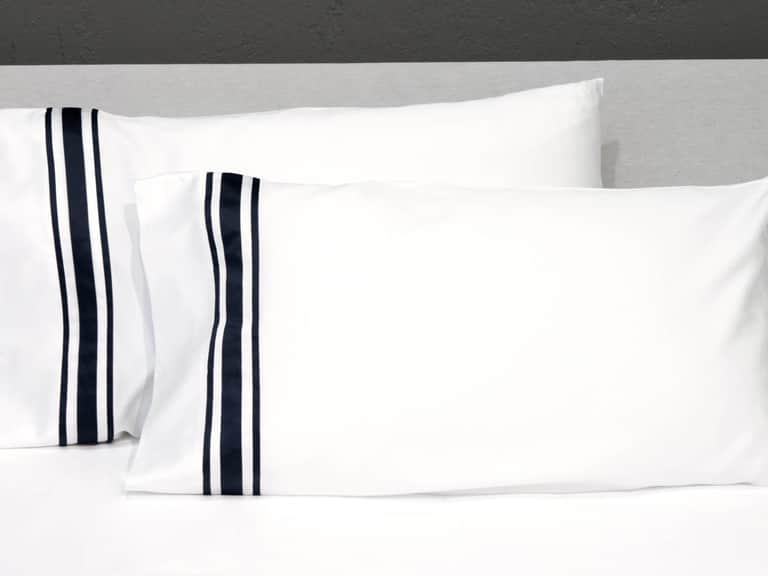
The Tivoli Pillowcases exemplify the Italian approach to everyday luxury. Crafted in Italy from 100% extra long-staple cotton sateen, these pillowcases deliver a soft, breathable surface with a 300 thread count. Their garment-dyed finish and lace-forward detailing echo a vintage warmth while maintaining contemporary ease. Made-for-night comfort meets journal-worthy design, ensuring these pillowcases are as fit for a quiet morning read as they are for a restful night.
Origin: Italy. Material: 100% Extra Long-Staple Cotton Sateen. Care: Machine wash warm, delicate cycle; tumble dry low; iron if desired on medium heat. Includes two pillowcases.
- Product: Tivoli Pillowcases
- Brand: Signoria Firenze
- Colorway: Assorted
Conclusion: a living archive for Italian bedding
From the loom to the linen closet, Italian bedding embodies a philosophy of quiet luxury, rooted in regional craft and sustained by modern manufacturing discipline. It is a field where history informs today’s comfort, and where the ethos of careful selection—of fiber, weave, and finish—ensures that a good night’s sleep is not merely a routine but a ritual. In a world of rapidly shifting trends, the Italian approach to bedding remains a constant: a respect for materials, an attention to detail, and a willingness to let tradition illuminate design without sacrificing practicality.